Showing posts with label Swedish Empire. Show all posts

Thursday, 6 November 2014

Happy Gustavus Adolphus Day !

Today, is a very special day, for it is Gustavus Adolphus Day. The commemoration for arguably one of the greatest generals in history. And for this reason, I have decided to do a short (informal) post to celebrate the great King of Sweden (and yes he is one of my heroes, despite that I am English). The day, on the 6th November, is also on the date when he died at the Battle of Lützen in 1632 during the Thirty Years War. Often called 'the Lion of the North' he transformed Sweden into one of the greatest powers in Europe. Not only did he aid the Protestant cause in the Thirty Year's War, he also lead successful wars against enemies such as the Polish-Lithuanian Commonwealth and Russia (Obviously, you can debate his motives, which like anybodies are never fully clear). He has been quoted as the 'Father of modern warfare', as was admired and studied by commanders such as Napoleon Bonaparte and Carl von Clausewitz. Yet, he also increased the efficiency of the administrative system in Sweden and also encouraged education, including in conquered territories, such as Estonia.


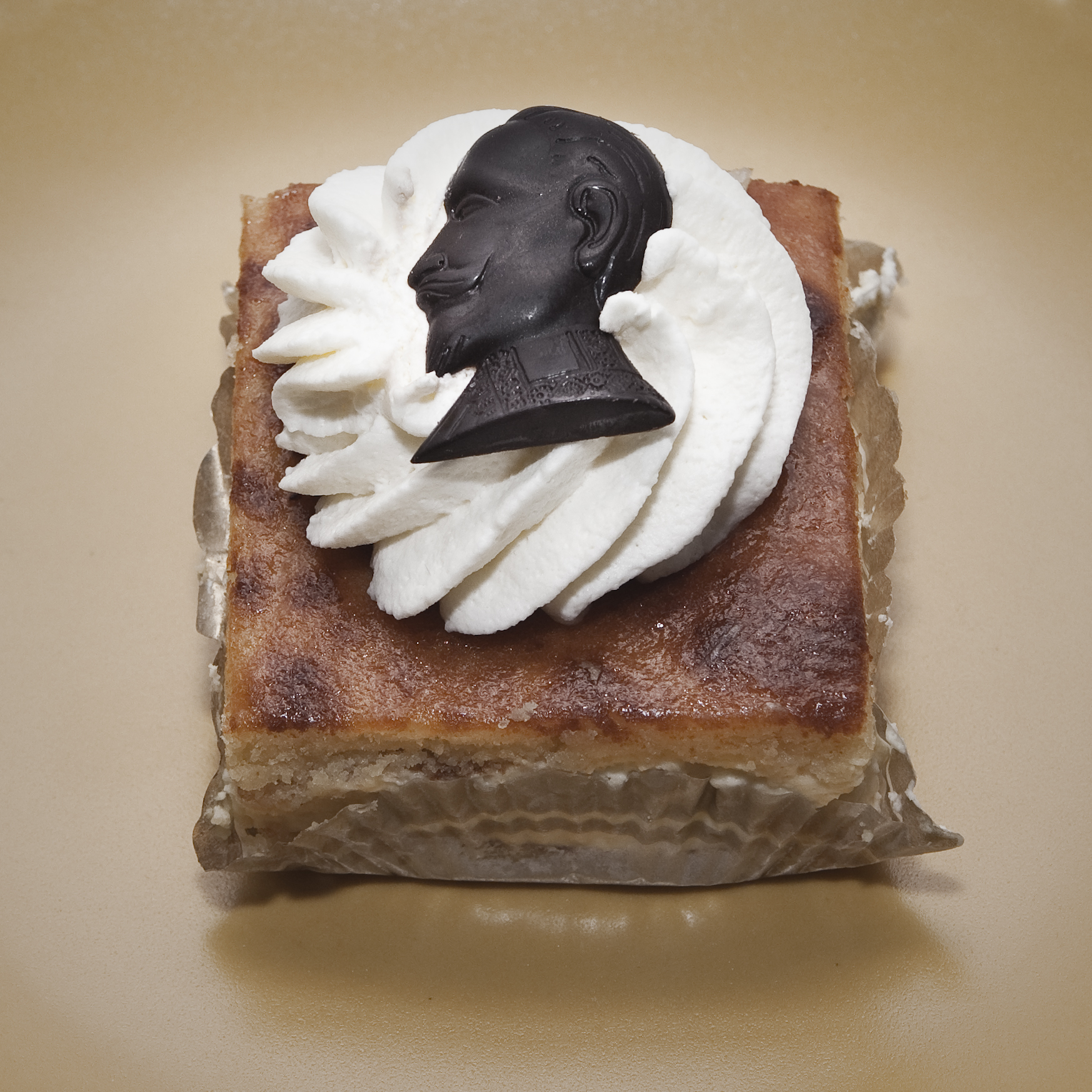
 Gustavus Adolphus Day is celebrated on the 6th November, despite him dying on the 16th November, according to the Gregorian Calendar, this is because the Julian calender was still in use in Sweden when he died. The day has been celebrated since the early 19th Century and became especially popular in 1832, the 200th anniversary of his death. Today, it is still popular in Gothenburg, which he founded, while it also still celebrated in Estonia and Finland. In Sweden and Finland it is an official Flag Day. Despite, being celebrated in the past with torchlight processions and patriotic speeches, mainly today it is celebrated with the Gustavus Adolphus Pastry.


Although, the recipes vary locally, they nearly always have a chocolate or marzipan portrait of the King on. Candy with the image of the King on was sold in the 1850s in a Konditorei, with the earliest mention of the pastry in western Sweden in the 1890s. The pastry may have been created around the festivities of when a statue of Gustavus was erected in Gothenburg, at this time, in the square now known as Gustav Adolfs Torg (Gustavus Adolphus Square). One bakery in Gothenburg claims to have created in the early 20th century, with the years 1905 or 1909 being mentioned. Now for a final celebration, lets role on the pictures of some pastries (all credit to those who made them and/ or who took the photos.)
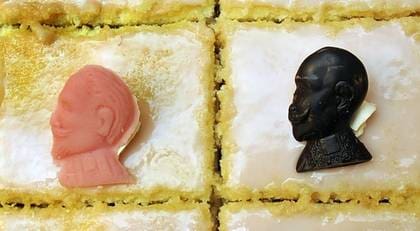


Yummy !

Image Credit goes to:

Wikipedia
http://swedenroots.blogspot.co.uk/2012/11/gustav-adolfsdagen.html
http://lettersfromgothenburg.wordpress.com/2011/11/06/gustavus-adolphus-day/
https://www.flickr.com/photos/malter/5152145216/

Thursday, 31 October 2013

Dominium Maris Baltici, Part 3: The Decline of the Swedish Empire

The Decline of the Swedish Empire

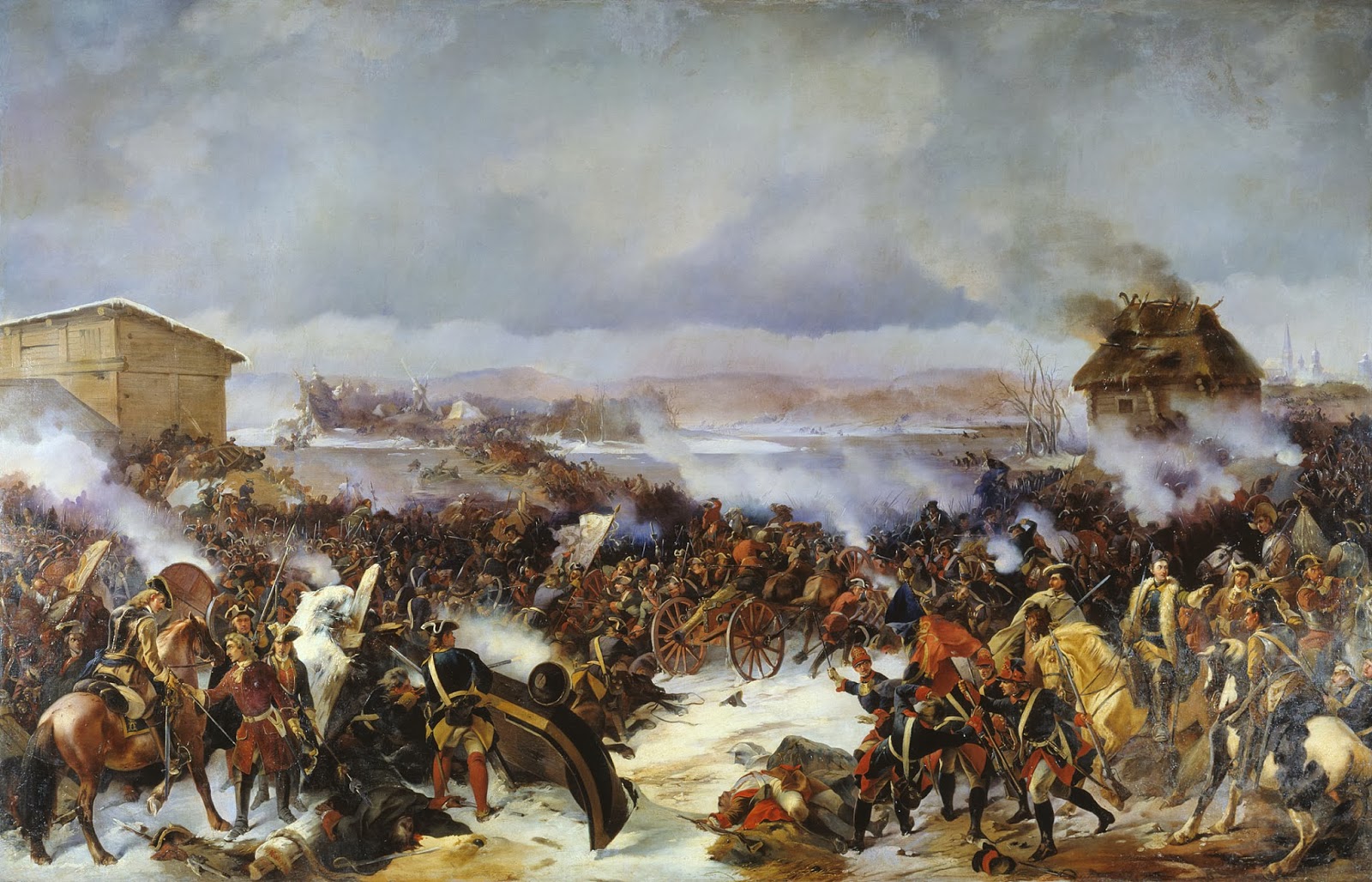
In 1700 the Great Northern War began when an alliance consisting of Denmark-Norway, Saxony-Poland-Lithuania (though Poland-Lithuania was officially neutral at first) and Russia launched an attack on Sweden (The Danish invaded first). The Polish, Danish and Russians had all suffered at the hands of the Swedish Empire, during its age of expansion. King Charles XII of Sweden, aided by the English and Dutch, rapidly forced the Danish into peace with the Peace of Travendal. During, the period when the Swedish and Danish were fighting. Augustus II the Strong of Saxony had invaded Livonia, but when Charles XII moved his army there ( from Denmark) Augustus swiftly withdrew his men. Charles XII then move to engage the Russians in Narva and Ingria. At Narva, Charles would prove that he was a skilled military commander when he attacked the Russian besiegers there. The Swedish had 10,000 men and were almost outnumbered by four to one by the Russians, however Charles XII of Sweden attacked under the cover of a blizzard and effectively split the Russian army in two. The battle was a great success for the Swedish, who only lost 667 men, while the Russians lost nearly 10,000 men. Charles then decided to campaign in Poland and by 1704 Stanislas Leszcznyski became the puppet King of Poland. During 1706, the Russians and Saxons were forced out of Poland and Augustus II recognised Stanislas as King of Poland. After so much success for the Swedish it is hard to see how the war ended with them no longer being a great power, the war's tide was about to change.

The Battle of Narva


While Charles XII had been campaigning in Poland, the Russians had made incursions into the parts of the Baltic controlled by Sweden and established St Petersburg. Charles XII wanted to permanently put an end to Russia being a threat to Sweden and so in 1707 his invasion of Russia began. However, Peter had reformed the Russian army, partially based on the Swedish army which it was about to face. After, winning the Battle of Holowczyn, Charles marched on Moscow, rather then trying to take St Petersburg. However, the Swedish were forced to march to Ukraine as harsh conditions set in. In 1709, the Swedish would face the battle that changed history, Poltava. The Ukrainian Cossacks aided Charles, as they sought independence. However, Charles had been wounded and was in a coma, so he could not lead the Swedish forces. The Russians decisively won the battle and they forced Charles into exile into the Ottoman Empire.

                                                                       Charles XII of Sweden 

Charles XII was unable to return to Sweden and so Sweden's enemies once again proved to be dangerous. The Danish were rebelled, but Russia continued to invade Sweden's Baltic lands and Finland. In Poland, Stanislas fled and Augustus returned. Charles was initially welcomed by the Ottomans and even provoked them into war with Russia. But, his scheming eventually made him into an unwelcome guest and he soon rode across Europe to Straslund, and then later moved on back to Sweden. In 1716 Charles invaded Norway, as part of his plan to attack Denmark. However, he failed to take the Akershus fortress, despite occupying Christiania and he was forced to retreat. He then invaded again and besieged Fredriksten, but once again he was forced to retreat. He lead one final invasion and once again besieged Fredriksten. On the 11th December 1718 Charles was struck in the head by a projectile and killed. It is unknown if he was killed by enemy fire or by one of his own men. The Great Northern War would end in 1721, with Sweden no longer being a great power and Peter the Great proclaiming Russia an empire. The Russian Empire was a great power following the end of the war.

Image Credit:
http://commons.wikimedia.org/wiki/File:Portrait_of_Charles_XII_of_Sweden.jpg
http://en.wikipedia.org/wiki/File:Victory_at_Narva.jpg
Sources: 
Greatly,
http://www.historylearningsite.co.uk/great_northern_war.htm


Dominium Maris Baltici, Part 2: The Consolidation of the Swedish Empire

The Consolidation of the Swedish Empire

The Peace of Westphalia (1648) helped to consolidate Sweden's status as a great power. However, Queen Christina's reign ended when she abdicated in 1654, in favour of her cousin, who would become Charles X Gustav. She may have abdicated due to her conversion to Catholicism and also due to her financially wasteful ways. Charles X Gustav had inherited a nation that was on the verge of turmoil, therefore, he spent his early  reign trying to save Sweden from bankruptcy. He also had to improve his relationship with the nobility, as they had not supported Christina's choice of him becoming King, not to mention that the relationship between the crown and the nobility had already been strained during Christina's reign. However, Charles X was soon at war, when he invaded the Polish-Lithuanian Commonwealth in 1655. He may have invaded as John II Casimir of Poland still claimed the Swedish throne. Throughout the Second Northern Wars, other nations intervened, such as Denmark and Russia. In 1660 Charles XII fell ill and later died of an illness. As his son was young, a regency council took control of Sweden. They signed several peace treaties throughout the regency. The Treaty of Oliva (1660) saw John Casimir withdraw his claim to the Swedish throne. Despite,some losses it seemed that Sweden had benefited from the conflicts it had faced around this time. However, the regency council that followed Charles X's death made an alliance with France in April 1672 (Despite, Sweden being part of the Anti-French Triple Alliance of 1668, until it broke down in 1670).

                                                         Charles X Gustav of Sweden
Charles XI's reign was characterised by the Scanian War, which had come about due to the Swedish alliance with France, and his transformation of Sweden into a semi-absolute monarchy. He assumed full control of the monarchy during the Scanian War, as he thought the country needed a strong leadership throughout the war. However, when the Scanian War ended (the war had seen Sweden lose a lot of possessions, only to be regained through the treaties which ended the war) Charles XI was unwilling to give up the nearly absolute control he had over Sweden. Despite, this Charles XI's reign saw the longest period of peace for the Swedish Empire and reforms of the military, economy and government. After, the Scanian War, Charles XI kept Sweden out of foreign affairs and made into a neutral power. However, Charles died of stomach cancer in April 1697. In 1700 Sweden would once again find itself at war, as the Great Northern War began. Charles XII, son of Charles XI, would face a reign that was nearly all took up by war against an Anti-Swedish alliance.

Image Credit: http://www.slideshine.de/12660, Sébastien Bourdons
Sources:
http://oregonstate.edu/instruct/phl302/philosophers/wasa.html
http://www.historylearningsite.co.uk/charles_x.htm
http://www.historylearningsite.co.uk/charles_xi_of_sweden.htm

Wednesday, 30 October 2013

Dominium Maris Baltici, Part 1: The Rise of the Swedish Empire

The Rise of the Swedish Empire 

The term Dominium maris baltici refers to the establishment of a Baltic Sea dominion. After, the Kalmar Union broke up in 1523 establishing a Baltic dominion was one of the main goals of the now independent Swedish nation. Sweden would came very close to achieving its goal, but the Great Northern War (1700-1721) put an end to its ambitions. However, during its height the Swedish Empire was one of the greatest powers in Europe. Traditionally, the empire began during Gustav II Adolf's reign. Gustav II Adolf of the House of Vasa ( also known Gustavus Adolphus) ascended to the throne in 1611 and throughout his reign made notable victories for Sweden, despite inheriting three wars from his father (against the Danish, Russians and the Polish-Lithuanian Commonwealth). He ended Russian access to the Baltic with the Treaty of Stolbovo (1617) and  he gained the province of Livonia from the Polish after the Truce of Altmark (1629). The conflict with the Danish was less successful, after Sweden was forced to pay a large ransom for the Fortress of Alvsborg, when the Treaty of Knäred was signed in 1613.

 Gustavus Adolphus changed the course of the Thirty Years War (1618-1648) when he intervened in 1630. His intervention may have been for economic gains and the defense of the Protestant faith,which was being suppressed by the Habsburgs, throughout the Holy Roman Empire. Gustavus Adolphus won a great victory at Breitenfeld, in 1631, the victory ensured Sweden's continuation in the Thirty Years War and  it hampered Imperial and Catholic forces. However, the reign of one of Sweden's greatest kings, came to quick end at the Battle of Lützen (1632), when he died in battle. Despite, his death the battle was a Swedish victory and the Swedish Empire would continue to expand for the years to follow.


The Swedish throne was inherited by Gustavus Adolphus' only legitimate child Christina. However, she was underage, so Maria Eleonora (Adolphus' wife) and the King's ministers assumed control of the government, until she took control in 1644. She also gained several possessions throughout her reign by seeking peace with Denmark. The Peace of Westphalia (1648) ended the Thirty Year's War and it considerably favoured Sweden. The treaty gave Western Pomerania to Sweden and changed its name to Swedish Pomerania. The treaty also gave other territorial gains to Sweden and 5,000,000 Riksdaler. However, the Peace of Westphalia did not bring an end to the struggle for control over the Baltic. Sweden would remain a great power and an important political player in Europe for many decades to come.

   Image Credit:http://reformationsa-org.win07.glodns.net/articles/GustavusAdolphus.htm
    Sources: Greatly,
    http://www.historylearningsite.co.uk/gustavus_adolphus3.htm