Yes, the blog is alive. It may have been almost a year to the date (well actually Gustavus Adolphus Day in November) that I did my last blog post. Of course, education gets in the way, but now I have decided to try and continue with a more casual tone then what I used to write with. Anyway, I thought I would start off discussing my own personal historical niggles. Whether, you think they are worthy or not I get annoyed by certain terms and ideas in history to varying degrees. And so let it begin !

The Byzant....Roman Empire

The map above shows the Byzantine Empire at its height under in 560 a.d under Emperor Justinian. Wait the Byzantine Empire ! why am I using a term coined by later historians ? This is my first niggle, I would prefer it to be called the Roman Empire, as it is effectively the Roman Empire or at least the Eastern Roman Empire (though apparently that is a later term as well, so maybe not.) The people of this empire called themselves Romaioi or Romioi (meaning Roman) or Graikoi (Greek) and they continued to refer to the empire as the Imperium Romanum (Latin) or Basileia Rhōmaiōn (Ancient Greek). Now really you could do a whole book on how the so called Byzantine Empire is the Roman Empire, with an added Greek element (that's a good idea), but it is a long and complex topic I suppose. The term 'Byzantine' was first used by the historian Hieronymus Wolf in 1557 over a century after the Fall of Constantinople. This term comes from the name of Constantinople, 'Byzantium' before Constantine made the city capital.
In the West, the Byzantine Empire was often called the Greek Empire in order to distinguish it from the Roman Empire of Charlemagne and his successors. In 800 A.D Pope Leo III used the excuse that the (Byzantine) Roman Empire had no male occupant at the time, to crown Charlemagne as Roman Emperor, because he needed his support. In the West, Imperator Romaniae was also used to describe the East, meaning Emperor of Romania, whereas Imperator Romanorum, Emperor of the Romans was used to describe Charlemagne and his successors. In the Islamic and Slavic worlds, no distinguishment was made where Byzantium was more straightforwardly seen as the continuation of the Roman Empire, one of the uses of the word Rûm in the Islamic World was simply as the name of the Roman (Byzantine) Empire.
There you go, we should really be calling Byzantium the Roman Empire, though to be fair I do understand the practicality of using it when we covering such distinct periods of time.
Constantinople not Istanbul

In 1953 the Four Lads sung about the official renaming of Constantinople to Istanbul. Though many may presume that Constantinople was renamed Istanbul in the 15th century after its conquest by the Ottomans this is a misconception. Constantinople was only officially renamed Istanbul in the first half of the 20th century. So this is a confusing topic, I must admit the city has many names. The name that was most common for official use until the fall of the Ottoman Empire, was Konstantiniyye which is an Arabic calqued (borrowed) form of Constantinople. Though it is wrong to say the word 'Istanbul' was never used, some sources show, in variants it exists back in the 10th century. It is the Greek version of a phrase that literally means 'in the city', so it is possible Istanbul was used in common speech in Turkish. Some times other names were more popular, such as Islambol, one source states that this was the more popular name in the 16th century and it was to some degree officially used from the late 17th century to the late 18th century.
By 1923, with the end of the Ottoman Empire ( fell in November 1922) and the creation of the Republic of Turkey all names except Istanbul had become obsolete in the Turkish language, but it was only in 1930 that Turkish authorities requested foreigners to adopt Istanbul with the Turkish Postal Service Law of 1930, otherwise there parcels would be rejected ! This led to Istanbul being the universally accepted name over time, and names such as Tsarigrad and Constantinople were no longer supposed to be used.
Just one final thing...this is a complex topic, every area of history is, I am not claiming to present the full picture, but a basic outline.By the way, Miklagarðr is an Old Norse name, meaning 'big city'.
Those horrid years between Rome and the Renaissance

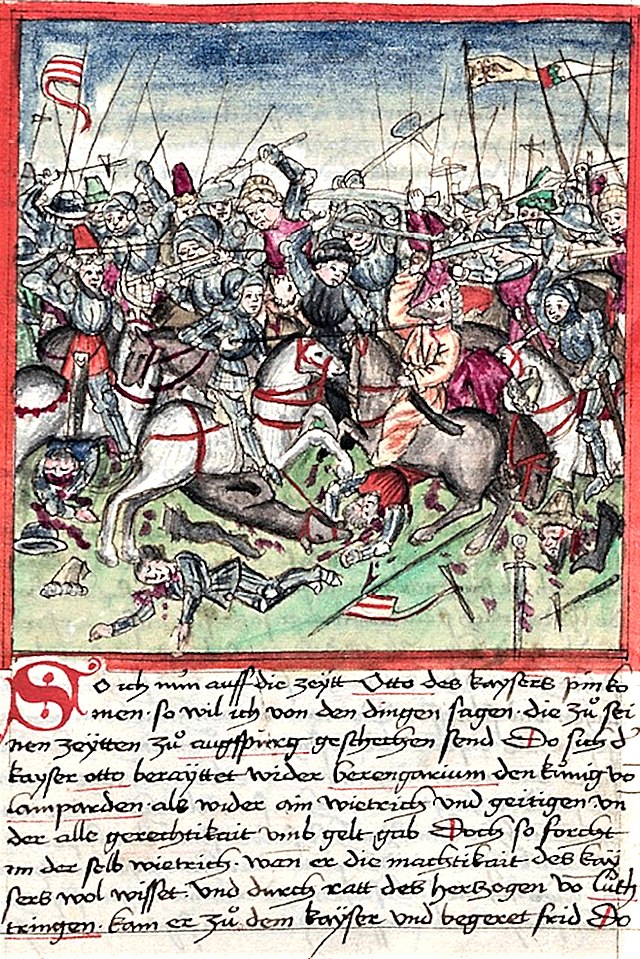
The Dark Ages the time when commoners were oppressed by a right-wing state and orcs freely raided villages and slayed peasants and the Church controlled absolutely everything......
This niggle is of course relating to the negative view of the Medieval Period and I would argue that the belief that this period was darker than any over period is due to the love of Antiquity that Western thinking has held since the Renaissance onwards. I understand that in academia the term 'the Dark Ages' is barely accepted, even if it is, it nearly always solely refers to the Early Middle Ages (5th-10th centuries) following the 'chaos' from the Fall of Rome. However, I think the image of the 'backwards' Middle Ages is still found commonly in popular culture.
The idea of a 'darkness' was first expressed by the scholar Petrarch in the 1330s, who was a big fan of the Greeks and Romans and was a critic of the quality of late Latin literature, this idea was enchanced by the Renaissance.
Later, during the Reformation, the Medieval Period became associated with Catholic Corruption and with the Age of Enlightenment in the 17th and 18th it became associated with being the exact opposite of reason due to its association as an 'Age of Faith'. Even today much of Western society is based on Roman and Greek law and philosophy and so it is easy to see why this period has been frowned on, as it is not commonly associated with these things.
Of course, we must not be fools, the Roman and Greek heritage had to be preserved throughout the Middle Ages to last into later periods of history and so it was. Learning was not defunct in the Middle Ages, after all it saw the foundation of many universities.
Furthermore, it is wrong to group around a 1000 years of history into one period. On a website once I saw a brilliant example if we say the Middle Ages ended in the late 15th century (generically), it lasted around 1000 years from the Fall of Rome. It has been around 500 years since 1500 and think about all the major events that have happened in that time, which is half of the Medieval Period ! It is wrong to group the entire Medieval Period together !
This is why we divided it into the Early, High and Late periods and as previously mentioned the Early Middle Ages are perhaps where the biggest doubts are laid. Many would point to the Carolingian Renaissance of the hight of the Early Period, but I think it is wrong to insult the so-called 'barbarian' cultures. They may have adopted parts of Roman culture, but is that not exactly what the Romans did to other cultures absorb parts of them to suit their purposes. I watched a programme called The Dark Ages: An Age of Light by Waldemar Januszczak on BBC Four and this shows that art was still prominent in the Early Middle Ages.
It is my opinion negativity on these periods is based on the Modern Mind, logic is often valued over faith. The intellectuals in this period held beliefs that are perhaps not as popular now in the Modern academic world (I know this is a sweeping statement) and that our Roman and Hellenic heritage perhaps has a much larger impact than you would think, even in 2015.
The Not So German Empire
.svg/600px-Banner_of_the_Holy_Roman_Emperor_(after_1400).svg.png)
It is not uncommon to see the Holy Roman Empire referred to as the German Empire and this annoys me a bit (whether I am in the right that is up to you). Now this is a detailed topic and I will not go into it much.
The term 'Holy Roman Empire' was apparently used first in the 13th century, but in 1512 in a decree following the Diet of Cologne the name was changed to Holy Roman Empire of the German Nation. So should we call the Medieval Holy Roman Empire the German Empire ? I would say no, but I am no expert.
This also raises the idea of whether we should refer to the Kingdom of Germany using 'German' or not. The Kingdom of 'Germany' started as part of the Frankish Kingdom which split following the Treaty of Verdun, therefore the rulers were often referred to as rex Francorum or even just rex. The first reference to a 'German' Kingdom was when the Pope referred to his enemy Henry IV as rex teutonicorum, King of the Teutons.
In the Middle Ages, the 'Kings' only became emperors after a Papal coronation. The title rex Romanorum, King of the Romans was used to emphasise their rule before they were emperors. King of the Romans later became associated with the heir apparent.
So when did Germany come into existence, this is no easy question, the term German was first used all the way back in the 3rd century BC, but Germany itself in the modern sense came into being in 1871. Someone, I asked makes a valid point in referring to that 'German' is a valuable term pre-1871 as it refers to Germany 'culturally', it would almost impossible for one person to recount all the tiny states within the Holy Roman Empire.
Conclusion
My so called 'niggles' seem to mainly refer to particular terms and whether they are in or out of place, depending on when they are used. The problem is that though these terms may never have been spoke historically by the people to whom they refer to it, we must accept that they are in common usage and have some helpfulness. It would seem impossible, unless we were there at the time, to know and use the exact terminology, but I still think there is a problem of clearing up possible mistakes that could be made with these terms !
Image Credit goes to
Wikipedia
http://lotr.wikia.com/wiki/File:Orcs.png
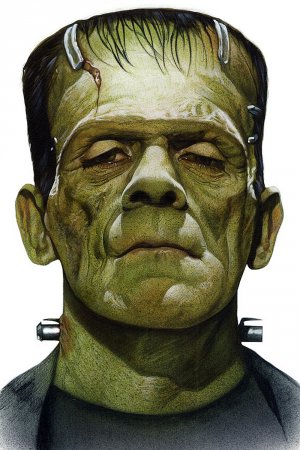
Did you get it ? The words 'It's Alive!" is never actually used in the novel Frankenstein; or the Modern Prometheus. Also, Frankenstein's monster is often erroneously referred as simply Frankenstein.
The Byzant....Roman Empire
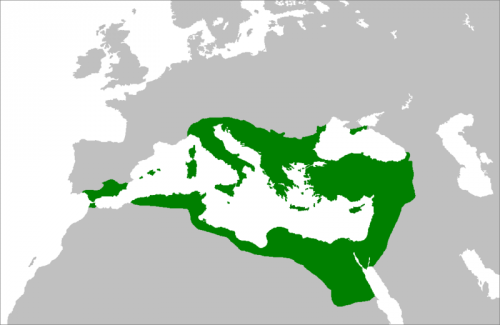
The map above shows the Byzantine Empire at its height under in 560 a.d under Emperor Justinian. Wait the Byzantine Empire ! why am I using a term coined by later historians ? This is my first niggle, I would prefer it to be called the Roman Empire, as it is effectively the Roman Empire or at least the Eastern Roman Empire (though apparently that is a later term as well, so maybe not.) The people of this empire called themselves Romaioi or Romioi (meaning Roman) or Graikoi (Greek) and they continued to refer to the empire as the Imperium Romanum (Latin) or Basileia Rhōmaiōn (Ancient Greek). Now really you could do a whole book on how the so called Byzantine Empire is the Roman Empire, with an added Greek element (that's a good idea), but it is a long and complex topic I suppose. The term 'Byzantine' was first used by the historian Hieronymus Wolf in 1557 over a century after the Fall of Constantinople. This term comes from the name of Constantinople, 'Byzantium' before Constantine made the city capital.
In the West, the Byzantine Empire was often called the Greek Empire in order to distinguish it from the Roman Empire of Charlemagne and his successors. In 800 A.D Pope Leo III used the excuse that the (Byzantine) Roman Empire had no male occupant at the time, to crown Charlemagne as Roman Emperor, because he needed his support. In the West, Imperator Romaniae was also used to describe the East, meaning Emperor of Romania, whereas Imperator Romanorum, Emperor of the Romans was used to describe Charlemagne and his successors. In the Islamic and Slavic worlds, no distinguishment was made where Byzantium was more straightforwardly seen as the continuation of the Roman Empire, one of the uses of the word Rûm in the Islamic World was simply as the name of the Roman (Byzantine) Empire.
There you go, we should really be calling Byzantium the Roman Empire, though to be fair I do understand the practicality of using it when we covering such distinct periods of time.
Constantinople not Istanbul
In 1953 the Four Lads sung about the official renaming of Constantinople to Istanbul. Though many may presume that Constantinople was renamed Istanbul in the 15th century after its conquest by the Ottomans this is a misconception. Constantinople was only officially renamed Istanbul in the first half of the 20th century. So this is a confusing topic, I must admit the city has many names. The name that was most common for official use until the fall of the Ottoman Empire, was Konstantiniyye which is an Arabic calqued (borrowed) form of Constantinople. Though it is wrong to say the word 'Istanbul' was never used, some sources show, in variants it exists back in the 10th century. It is the Greek version of a phrase that literally means 'in the city', so it is possible Istanbul was used in common speech in Turkish. Some times other names were more popular, such as Islambol, one source states that this was the more popular name in the 16th century and it was to some degree officially used from the late 17th century to the late 18th century.
By 1923, with the end of the Ottoman Empire ( fell in November 1922) and the creation of the Republic of Turkey all names except Istanbul had become obsolete in the Turkish language, but it was only in 1930 that Turkish authorities requested foreigners to adopt Istanbul with the Turkish Postal Service Law of 1930, otherwise there parcels would be rejected ! This led to Istanbul being the universally accepted name over time, and names such as Tsarigrad and Constantinople were no longer supposed to be used.
Just one final thing...this is a complex topic, every area of history is, I am not claiming to present the full picture, but a basic outline.By the way, Miklagarðr is an Old Norse name, meaning 'big city'.
Those horrid years between Rome and the Renaissance
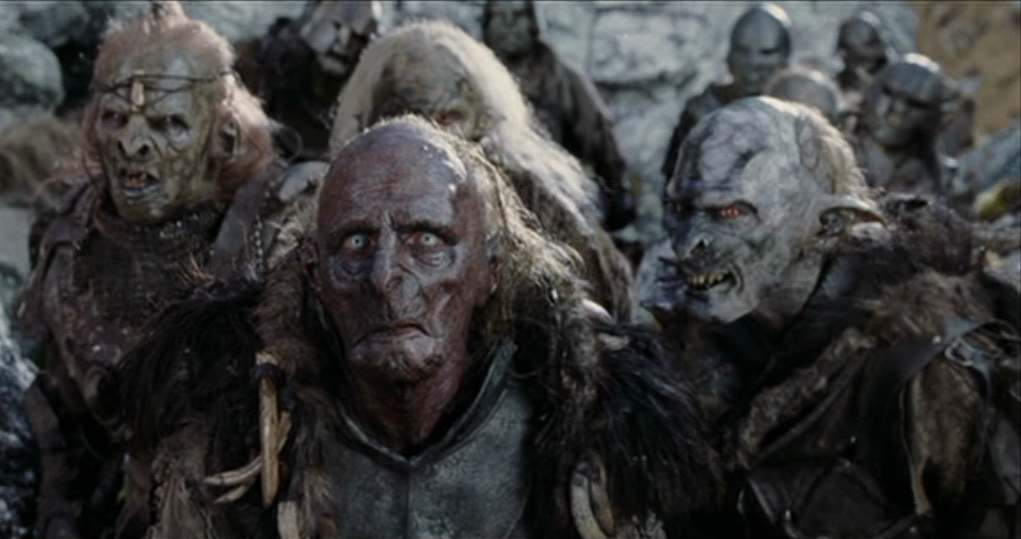
The Dark Ages the time when commoners were oppressed by a right-wing state and orcs freely raided villages and slayed peasants and the Church controlled absolutely everything......
This niggle is of course relating to the negative view of the Medieval Period and I would argue that the belief that this period was darker than any over period is due to the love of Antiquity that Western thinking has held since the Renaissance onwards. I understand that in academia the term 'the Dark Ages' is barely accepted, even if it is, it nearly always solely refers to the Early Middle Ages (5th-10th centuries) following the 'chaos' from the Fall of Rome. However, I think the image of the 'backwards' Middle Ages is still found commonly in popular culture.
The idea of a 'darkness' was first expressed by the scholar Petrarch in the 1330s, who was a big fan of the Greeks and Romans and was a critic of the quality of late Latin literature, this idea was enchanced by the Renaissance.
Later, during the Reformation, the Medieval Period became associated with Catholic Corruption and with the Age of Enlightenment in the 17th and 18th it became associated with being the exact opposite of reason due to its association as an 'Age of Faith'. Even today much of Western society is based on Roman and Greek law and philosophy and so it is easy to see why this period has been frowned on, as it is not commonly associated with these things.
Of course, we must not be fools, the Roman and Greek heritage had to be preserved throughout the Middle Ages to last into later periods of history and so it was. Learning was not defunct in the Middle Ages, after all it saw the foundation of many universities.
Furthermore, it is wrong to group around a 1000 years of history into one period. On a website once I saw a brilliant example if we say the Middle Ages ended in the late 15th century (generically), it lasted around 1000 years from the Fall of Rome. It has been around 500 years since 1500 and think about all the major events that have happened in that time, which is half of the Medieval Period ! It is wrong to group the entire Medieval Period together !
This is why we divided it into the Early, High and Late periods and as previously mentioned the Early Middle Ages are perhaps where the biggest doubts are laid. Many would point to the Carolingian Renaissance of the hight of the Early Period, but I think it is wrong to insult the so-called 'barbarian' cultures. They may have adopted parts of Roman culture, but is that not exactly what the Romans did to other cultures absorb parts of them to suit their purposes. I watched a programme called The Dark Ages: An Age of Light by Waldemar Januszczak on BBC Four and this shows that art was still prominent in the Early Middle Ages.
It is my opinion negativity on these periods is based on the Modern Mind, logic is often valued over faith. The intellectuals in this period held beliefs that are perhaps not as popular now in the Modern academic world (I know this is a sweeping statement) and that our Roman and Hellenic heritage perhaps has a much larger impact than you would think, even in 2015.
The Not So German Empire
It is not uncommon to see the Holy Roman Empire referred to as the German Empire and this annoys me a bit (whether I am in the right that is up to you). Now this is a detailed topic and I will not go into it much.
The term 'Holy Roman Empire' was apparently used first in the 13th century, but in 1512 in a decree following the Diet of Cologne the name was changed to Holy Roman Empire of the German Nation. So should we call the Medieval Holy Roman Empire the German Empire ? I would say no, but I am no expert.
This also raises the idea of whether we should refer to the Kingdom of Germany using 'German' or not. The Kingdom of 'Germany' started as part of the Frankish Kingdom which split following the Treaty of Verdun, therefore the rulers were often referred to as rex Francorum or even just rex. The first reference to a 'German' Kingdom was when the Pope referred to his enemy Henry IV as rex teutonicorum, King of the Teutons.
In the Middle Ages, the 'Kings' only became emperors after a Papal coronation. The title rex Romanorum, King of the Romans was used to emphasise their rule before they were emperors. King of the Romans later became associated with the heir apparent.
So when did Germany come into existence, this is no easy question, the term German was first used all the way back in the 3rd century BC, but Germany itself in the modern sense came into being in 1871. Someone, I asked makes a valid point in referring to that 'German' is a valuable term pre-1871 as it refers to Germany 'culturally', it would almost impossible for one person to recount all the tiny states within the Holy Roman Empire.
Conclusion
My so called 'niggles' seem to mainly refer to particular terms and whether they are in or out of place, depending on when they are used. The problem is that though these terms may never have been spoke historically by the people to whom they refer to it, we must accept that they are in common usage and have some helpfulness. It would seem impossible, unless we were there at the time, to know and use the exact terminology, but I still think there is a problem of clearing up possible mistakes that could be made with these terms !
Image Credit goes to
Wikipedia
http://lotr.wikia.com/wiki/File:Orcs.png